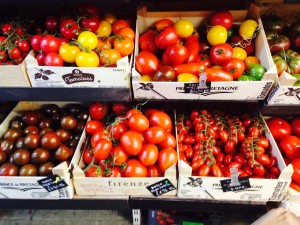
By guest blogger, Dr Susan Aldridge, freelance writer and editor based in London, with an interest in medicine, health, science and food /nutrition. I have always loved tomatoes and tomato-based dishes – when I was growing up, Heinz cream of tomato soup was always my favourite food and today, I’ll always go for pasta napoletana in an Italian restaurant (often with a tomato salad on the side). So I was especially keen to invent some new recipes for this month’s Superfood blog.
Today, tomatoes are actually the most common source of vitamins and minerals in the Western diet. But it wasn’t always so. Until the 19th century, when they were first cultivated as food, they were believed to be poisonous. That’s probably because tomatoes belong to the deadly nightshade family (as do peppers and aubergines) and it’s true that every part of the tomato plant, save the fruit, contains potent toxins. I say fruit because botanically the tomato is a fruit, but for culinary and nutritional purposes we treat it as a vegetable.
Tomatoes are probably best known as a source of lycopene, the pigment that gives them their red colour. Lycopene is also found in other red, orange and yellow fruits and vegetables, but tomatoes contain particularly high amounts. You may have heard that cooked tomatoes give you more lycopene than raw ones. This is because cooking releases the lycopene from tomato cells so there is more of it available to be absorbed by the body. Cooking in oil, like olive oil, makes even more lycopene available. Thus, classic tomato dishes like pasta napoletana are particularly good for you, especially if served with a big salad or a green vegetable like spinach on the side.
Countries where tomato consumption is high, such as Mexico, Spain and Italy, tend to have lower rates of prostate cancer. Some (but not all) studies have suggested a link between consumption of lycopene and protection from prostate cancer. If lycopene protects against prostate cancer, then it is likely that it may protect from other forms of cancer too. Lycopene is a flavanoid and, as such, a powerful antioxidant but it is not known whether it is this which gives the compound its anti-cancer properties.
Tomatoes are versatile, in many senses. They can be eaten raw, cooked and they can be dried to concentrate the flavour. They can be green, orange, yellow, purple or, of course, red. There are also many striped varieties! Finally, there are five basic tomato shapes – beefsteak, cherry, globe, grape and plum.
Although cooked tomatoes maybe have more health benefits in terms of lycopene, raw tomatoes are rich in fibre, vitamin A and vitamin C – and all my recipes this month focus upon raw (and dried) tomatoes.
Sunshine Juice (loaded with vitamins!)
Serves one
Around 400g tomatoes (any kind)
Six carrots, peeled and chopped into chunks
Two oranges, peeled
Ginger – one inch peeled chunk
Feed all ingredients into the juicer and consume juice immediately (this one separates quickly.
Red Rainbow Salad
Serves four (or two people over two days)
There’s a multitude of flavours and textures in this colourful salad. If you can think of any more red/orange/pink ingredients, do add them in! By the way, a handful of mixed seeds is a nice crunchy addition, as I found when eating it on the second day.
Around 400g tomatoes (use two different kinds, to add interest)
Two cooked beetroot
Four carrots, shredded
One red lettuce, torn into leaves
Two tablespoons of pomegranate seeds
One red onion, chopped
Two peaches, chopped, or one cup of watermelon chunks
One romano red pepper, chopped
One packet of radishes, halved
Mix all ingredients. This is a very juicy salad so no dressing needed except a squeeze of lemon.
Mediterranean Salad
Serves two.
This is my variation on the classic Insalata Caprese (mozzarella, tomato and basil)
200g cherry tomatoes, halved
100g sun-dried tomatoes, chopped
50g feta cheese, cubed
50g mozzarella pearls
50g olives (stuffed, green, black, marinated…whatever appeals)
Chopped thyme
Torn basil
Mix all ingredients except the herbs. Dress with one tablespoon of extra virgin cold-pressed flax seed or olive oil and a splash of good balsamic vinegar. Finish with the herbs. Good served with an Italian or Greek bread. This is my dish to take along to any BBQs we’re invited to this summer!


Leave a Reply