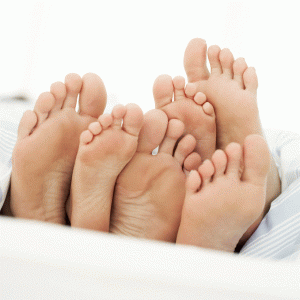
Unsupportive shoes and too much time on your feet can lead to Plantar fasciitis
Lots of people say ‘what on earth is that?’ but in fact Plantar Fasciitis is quite a common problem. It affects your feet and last year I had three to four months of pain because of it.
To be told you have a 12 week wait to see a physiotherapist when your foot is very painful, is to say the least quite depressing. I went from playing tennis and golf every week to not doing any vigorous exercise because I had Plantar fasciitis, an excruciatingly painful condition on the sole and heel.
- What is Plantar fasciitis?
The symptoms
The sole pf the foot becomes inflamed usually around the heel. The pain can be excruciating when you walk on it. tThis s is an inflammatory condition of the fascia in the sole of the foot, which runs from the heel to the toes. Plantar fascia is a strong piece of connective tissue stretching from the heel to the mid foot and works like a shock absorber. Most of the pain is usually felt in the heel, and It can be excruciating when walking or even when not.
For years it was known as Policeman’s foot as the bobbies often got it from walking up and down the road in solid shoes. As people have so often worn uncomfortable shoes, it must have been a problem for a long time. osteopaths and physiotherapists usually treat the leg as well, massaging and manipulating to loosen tension.
Many clinics, especially those on the NHS, offer shock wave treatments and/or steroid injections but I didn’t want these. I wanted to be sure that it didn’t come back too.
The regime I followed:
- Exercises to be done every day to help stretch the foot There are a variety of these but the easiest is going up on the ball of the foot with both feet and then holding on to something while you raise one foot at a time. There are plenty of stretching exercises and one of the best is putting the foot half on a step and allowing the heel part to go down and come up again. Obviously you choose a low step where you can hold on safely.
- A daily bowl of hot water with Epsom salts proved to be the best part of my day and I did it daily; Try massaging; the foot generally and the calf too as the tightness radiates up the legs.
- Treatments (not on the NHS): osteopathy, massage, and laser treatment, which provides enormous relief, is warming and enjoyable. I am convinced that laser treatment made me better. You have to pay for it but it is becoming widely available in osteopathy, podiatry and physiotherapy clinics.
- Shoes are so important – one of the reasons for getting this condition is (certainly for women) because of shoes worn in the past. Shoes with good arches and made with comfort and Plantar fasciitis in mind
- T here are many specialist shoe manufacturers who sell appropriate and very comfortable shoes with arches. Otherwise go online and look for orthotics, a cheaper option but much better if they fit into your existing shoes.
How do you get completely better? After three months of no sport and a total of five months with this condition, I opted for laser treatment.
This is non-invasive and very pleasant to have but above all it’s effective. I also bought a lot of shoes and orthotics and have continued to only wear these now and do the daily exercises, a year after I recovered.
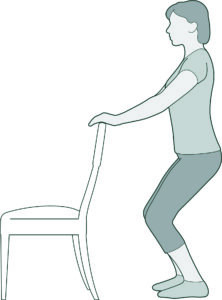 something out, have a look or to clean it. In yoga I have avoided doing squats that hurt my knees. So, when I was asked to show an NHS physiotherapist some squats, I winced. Then he suggested I did them daily to help ease my knees. It’s not always the arthritis in the knees that hurts, it’s often the tightness in and around them.
 (The National Institute for Health and Care Excellence) has produced draft guidelines advising GPs that the first recommendation they should give for OA is exercise and weight loss, instead of strong painkillers, that have been standard treatment for some time. See my video on S
