 Healthy Soul users can get a discount of 5% on all products at www.superfooduk.com Huge range of products available.
Use the special Healthy Soul code: HSoul1
Taking responsibility for your own wellbeing
Healthy Soul users can get a discount of 5% on all products at www.superfooduk.com Huge range of products available.
Use the special Healthy Soul code: HSoul1
 Recommendations to put an extra 20 per cent tax on sugary drink to prevent people becoming obese were put forward by the BMA (British Medical Association) recently. But will anything change? Recommendations come out all the time but do they get taken up. The BMA claims that poor diets cost 70,000 premature deaths a year.
The BMA suggests an extra tax of 20 per cent on unhealthy food and drinks. A 330ml fizzy drink is likely to contain up to nine teaspoonfuls of sugar. Apparently a sugar tax on drinks in Mexico has resulted in lower consumption. The overall aim is to reduce the number of people becoming obese and getting diabetes, which are both attributed to the increase in sugar consumption, which is highest in the 11 to 18 year old group. They take 15.6 per cent of their energy from sugar, when the limit for everyone should be 5 per cent.
There should be restrictions on promoting unhealthy foods to children through advertising and fun characters. Instead they suggest that there should be marketing campaigns to promote awareness and the importance of healthy foods. Other suggestions are for school meals to include a free fruit and vegetable scheme, and for the price of fruit and vegetables to be subsidised.
How many times have you visited a hospital and found the full range of fizzy drinks, crisps, sweets and chocolate on sale in the shop? The recommendations suggest banning these sales, and having a traffic light coding on food.
Other recommendations include:
• No trans fats in food allowed.
• Compulsory reduction of salt levels in food and drink products.
• Targets to reduce calories, fat, saturated fat and added sugar levels in a range of soft drinks, confectionery, biscuits, and many other processed foods.
.
Needless to say this needs international co-operation.
Dire warnings from the British Medical Association include the spectre of 30 per cent of the UK population being obese by 2030.

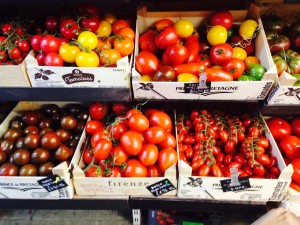
By guest blogger, Dr Susan Aldridge, freelance writer and editor based in London, with an interest in medicine, health, science and food /nutrition. I have always loved tomatoes and tomato-based dishes – when I was growing up, Heinz cream of tomato soup was always my favourite food and today, I’ll always go for pasta napoletana in an Italian restaurant (often with a tomato salad on the side). So I was especially keen to invent some new recipes for this month’s Superfood blog.
Today, tomatoes are actually the most common source of vitamins and minerals in the Western diet. But it wasn’t always so. Until the 19th century, when they were first cultivated as food, they were believed to be poisonous. That’s probably because tomatoes belong to the deadly nightshade family (as do peppers and aubergines) and it’s true that every part of the tomato plant, save the fruit, contains potent toxins. I say fruit because botanically the tomato is a fruit, but for culinary and nutritional purposes we treat it as a vegetable.
Tomatoes are probably best known as a source of lycopene, the pigment that gives them their red colour. Lycopene is also found in other red, orange and yellow fruits and vegetables, but tomatoes contain particularly high amounts. You may have heard that cooked tomatoes give you more lycopene than raw ones. This is because cooking releases the lycopene from tomato cells so there is more of it available to be absorbed by the body. Cooking in oil, like olive oil, makes even more lycopene available. Thus, classic tomato dishes like pasta napoletana are particularly good for you, especially if served with a big salad or a green vegetable like spinach on the side.
Countries where tomato consumption is high, such as Mexico, Spain and Italy, tend to have lower rates of prostate cancer. Some (but not all) studies have suggested a link between consumption of lycopene and protection from prostate cancer. If lycopene protects against prostate cancer, then it is likely that it may protect from other forms of cancer too. Lycopene is a flavanoid and, as such, a powerful antioxidant but it is not known whether it is this which gives the compound its anti-cancer properties.
Tomatoes are versatile, in many senses. They can be eaten raw, cooked and they can be dried to concentrate the flavour. They can be green, orange, yellow, purple or, of course, red. There are also many striped varieties! Finally, there are five basic tomato shapes – beefsteak, cherry, globe, grape and plum.
Although cooked tomatoes maybe have more health benefits in terms of lycopene, raw tomatoes are rich in fibre, vitamin A and vitamin C – and all my recipes this month focus upon raw (and dried) tomatoes.
Sunshine Juice (loaded with vitamins!)
Serves one
Around 400g tomatoes (any kind)
Six carrots, peeled and chopped into chunks
Two oranges, peeled
Ginger – one inch peeled chunk
Feed all ingredients into the juicer and consume juice immediately (this one separates quickly.
Red Rainbow Salad
Serves four (or two people over two days)
There’s a multitude of flavours and textures in this colourful salad. If you can think of any more red/orange/pink ingredients, do add them in! By the way, a handful of mixed seeds is a nice crunchy addition, as I found when eating it on the second day.
Around 400g tomatoes (use two different kinds, to add interest)
Two cooked beetroot
Four carrots, shredded
One red lettuce, torn into leaves
Two tablespoons of pomegranate seeds
One red onion, chopped
Two peaches, chopped, or one cup of watermelon chunks
One romano red pepper, chopped
One packet of radishes, halved
Mix all ingredients. This is a very juicy salad so no dressing needed except a squeeze of lemon.
Mediterranean Salad
Serves two.
This is my variation on the classic Insalata Caprese (mozzarella, tomato and basil)
200g cherry tomatoes, halved
100g sun-dried tomatoes, chopped
50g feta cheese, cubed
50g mozzarella pearls
50g olives (stuffed, green, black, marinated…whatever appeals)
Chopped thyme
Torn basil
Mix all ingredients except the herbs. Dress with one tablespoon of extra virgin cold-pressed flax seed or olive oil and a splash of good balsamic vinegar. Finish with the herbs. Good served with an Italian or Greek bread. This is my dish to take along to any BBQs we’re invited to this summer!
By guest blogger, Dr Susan Aldridge, freelance writer and editor based in London, with an interest in medicine, health, science and food /nutrition.
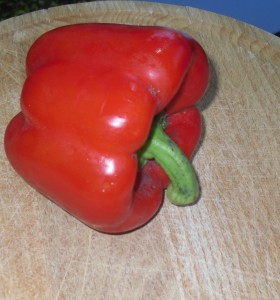
They are extremely rich in antioxidant and anti-inflammatory phytonutrients, chief among which are the carotenoids, such as the alpha and beta-carotene and lutein. In fact, over 30 different carotenoids are found in pepper. This class of compounds is particularly associated with eye health (so, as well as blueberries, which are well known for this benefit, add peppers to your regular diet for good vision as you get older).
One pepper also contains more vitamin C than an orange as well as supplying folic acid, potassium, vitamin A, vitamin E and several different minerals.
Summer Juice
I hadn’t thought to juice peppers before, but this is a lovely, healthy juice, best served chilled (so use the ingredients straight from the fridge).
Serves one
One red pepper, deseeded and chopped
Handful of tomatoes
Four carrots, chopped
One lemon
One inch piece of ginger, peeled.
Pepper and Tomato Salad
This is a warm salad, lovely as a barbecue dish served with grilled halloumi cheese.
Serves two
One yellow, one red and one orange pepper, deseeded and cut into strips
Around 400 grams tomatoes, halved (any kind – I used a mixture of green striped, orange, red and yellow heritage tomatoes to make the dish even more colourful)
Three cloves of chopped garlic
Two finely chopped chillis (optional)
Heat the oven to 200°C and line a baking tray with foil. Spread out the peppers and tomatoes (cut side up) and roast, uncovered, for 15 minutes. Then add the garlic and chilli and cover with foil. Roast for another 15 minutes (or until soft). Finish with chopped fresh herbs and black pepper.
Vegetarian Chilli
Serves four (or two people for two days, as it reheats well).
One red, one orange and one yellow pepper, deseeded and cut into small chunks
Two red onions, sliced
Three chopped chillis
Around 400g of cooked chick peas, kidney bean, black beans or a mixture
Around 200g peas and/or sweetcorn
Big jar of tomato sauce
Soften the peppers and onion in coconut oil and add in all other ingredients. Cook for 30-40 minutes. Serve with a side of crème fraiche or yoghurt and a green salad containing avocado.
 Cassandra Barns, nutritionist, Nutri Centre gives her top five supplements for the new season.
The Omega-3
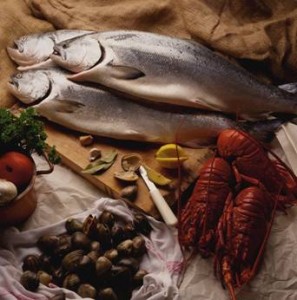
EPA and DHA are two omega-3 fatty acids with specific health benefits that are also great for glossy hair, strong nails and supple skin. In foods, they are found mainly in oily fish and fish livers, with small amounts of DHA found in seaweeds such as nori. However the typical western diet often contains too much omega 6 in relation to omega 3, and we need a ratio of 1:1 or 1:2 for optimal health.
Health benefits:
• Omega 3 fats can also help burn body fat.
• Brain health, memory, learning and concentration.
• Eye health. DHA is also concentrated in the retina of the eye and has an essential role in its function.
• Heart health.
• Pregnancy and the developing child.
• Controlling inflammation and pain.
For vegetarians try Vega’s Vegamega-3, from Nutri Centre. It contains high amounts of DHA and EPA from a non-fish source.
| Featured products | |||
| Wileys Finest Orange Burst Orange Liquid | Wileys | 250ml | £15.99 |
| Vegamega-3 (vegetarian Omega 3) | Vega | 30 capsules | £14.95 |
| Wileys Finest Easy Swallow Minis | Wileys | 60 softgels | £9.99 |
| Omega 3 for Kids Berry Bursts | Lambert’s | 100 capsules | £11.45 |
| *5 per cent discount with this code: HSoul1at www.superfooduk.com* | |||
2. The Multivitamin and Mineral supplement
A high proportion of the UK population is falling short of the government’s RDA of vitamins & minerals. A multivitamin supplement is an obvious choice. This is principally because these products contain multiple nutrients, which can help to fill in the gaps in our diet and may benefit our health in many ways.
And remember that the RDA levels are just minimum requirements, not optimal amounts. So it’s worth taking a good quality multivitamin to fill those gaps and act as a good ‘insurance policy’.
For normal energy production, we need to take in sufficient levels of several B vitamins, vitamin C, and the minerals iron, iodine, magnesium, calcium, copper and manganese. And for the immune system, we need to get enough of vitamins A, C and D, B6, B12 and folic acid, as well as copper, zinc, iron and selenium.
Source of Life Chewable Multi-Vits and Minerals Whole Food Concentrates, 90, £22.65.
Terranova’s Full Spectrum Multi-vitamin Complex, 100 veg capsules, £24.75
| Featured products | |||
| Chewable Multi-Vits and Minerals Whole Food Concentrates | Source of Life | 90 | £22.65 |
| Full Spectrum Multi-vitamin Complex | Terranova | 100 veg caps | £24.75 |
| *5 per cent discount with this code: HSoul1at www.superfooduk.com* | |||
3. Coenzyme Q10
Coenzyme Q10 or CoQ10 is your anti-ageing secret weapon, both inside and out. The antioxidants within CoQ10 can withstand and help reverse skin damage, preserving the collagen and elastin within your skin cells to make you appear younger. CoQ10 is a vitamin-like substance, present in every cell in our body, which is vital for energy production. Although the body makes its own CoQ10, levels have been found to decrease from the age of 20 onwards!
CoQ10 also supports brain health and helps protect against age-related memory decline as well as quenching free radicals that damage cells and age the skin; a very powerful antioxidant, decreasing the ageing process in our cells, arteries, hearts, gums and brains.
| Featured products | |||
| CoQ10 30mg Complex | Terranova | 100 veg caps | £22.75 |
|
*5 per cent discount with this code: HSoul1 |
|||
4. The Probiotic
Probiotics are supplements of ‘friendly bacteria’ such as lactobacillus acidophilus that aim to support the populations of healthy microorganisms in our digestive tract. Probiotics are best known for encouraging good digestion, keeping you regular and helping with problems such as bloating.
The benefits
• Boosts the immune system, because 70 to 80 per cent of the body’s immune cells are in the walls of the digestive tract.
• Joint health – through their link to the immune system, the good bacteria may help prevent the autoimmune reactions that can inflame our joints, and generally control inflammation in the body.
• Oral health – by helping to control the populations of ‘bad’ bacteria that can cause dental caries (tooth decay).
• Maintaining healthy cholesterol levels. Cholesterol is filtered out of the blood by the liver and enters the digestive tract in the bile. Although some of the cholesterol is reabsorbed, some of it is excreted, and it is thought that the healthy gut bacteria have a role in ensuring this happens. A successful clinical trial has been carried out using the probiotic strain lactobacillus plantarumfor helping to lower cholesterol.
• Low mood and anxiety. Many nerve cells (neurons) line the walls of the digestive tract; so many in fact that the gut is sometimes referred to as our ‘second brain’, so our feelings can affect our digestion and vice-versa.
| Featured products | |||
| Lepicol Plus Digestive Enzymes | Lepicol | 180g powder | £13.49 |
| Probiotic Plus Total Immune and Energy Support | ProVen | 14 sachets | £8.95 |
| *5 per cent discount with this code: HSoul1at www.superfooduk.com | |||
Magnesium
Some 40 per cent of females and 36 per cent of males take in less than the EAR (Estimated Average Requirement) of magnesium.
It has many roles in the body:
• It is necessary for over 300 enzyme reactions, including those that generate energy from the food that we eat, and those that produce DNA and RNA for normal cell growth and reproduction.
• It is also necessary for allowing our muscles to relax, as it blocks the flow of calcium into the muscle cells (a process that causes muscle to contract).
• About half the magnesium in our body is stored in our bones, and it plays a role in bone strength.
• Magnesium is also necessary for normal function of the nervous system, and normal psychological function.
Because of all these different roles, deficiency in magnesium has been linked to many symptoms and conditions. These include cramping or twitching of the muscles, fatigue, insomnia, lack of appetite, confusion and poor memory. Low levels of magnesium are also associated with conditions such as high blood pressure, osteoporosis and diabetes, migraines, PMS and even depression.
For ease of us try the Magnesium Oil Original Spray below.
| Featured products | |||
| Magnesium Oil Joint Spray | Better You | 100ml | £12.49 |
| Magnesium Oil Sports Spray | Better You | 100ml | £12.49 |
| Magnesium Soak | Better You | 500ml | £19.99 |
| *5 per cent discount with this code: HSoul1at www.superfooduk.com | |||